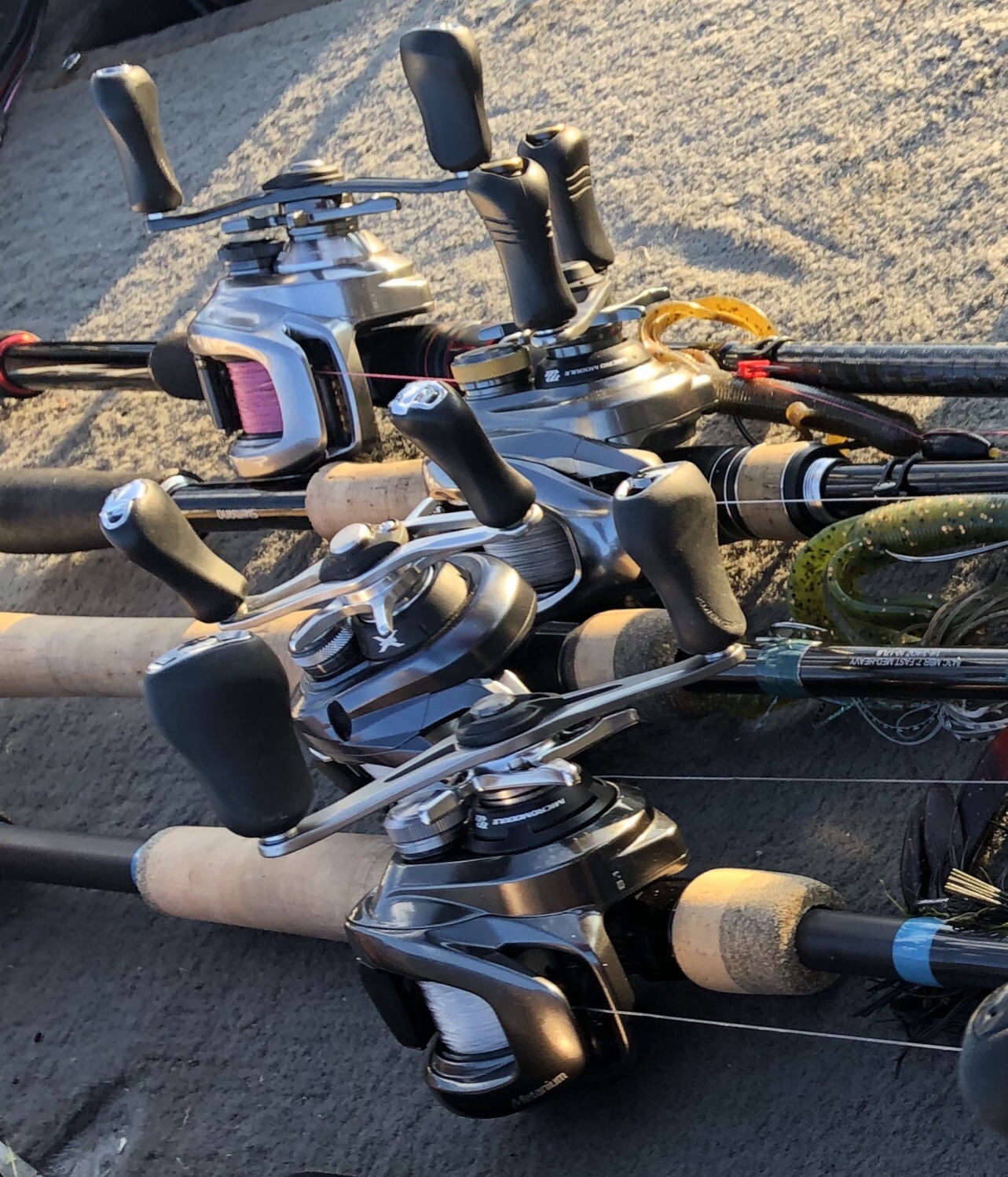
I’d like to start by saying that everyone has a different style and preference for their own rod and reel setups. By no means am I saying that you “must have” this rod and reel in order to successfully catch fish, but if you’re looking for a mid to high end combo, this setup is one of the best options available in my opinion. It’s a healthy balance of quality high end gear and not reaching the top end of the market.
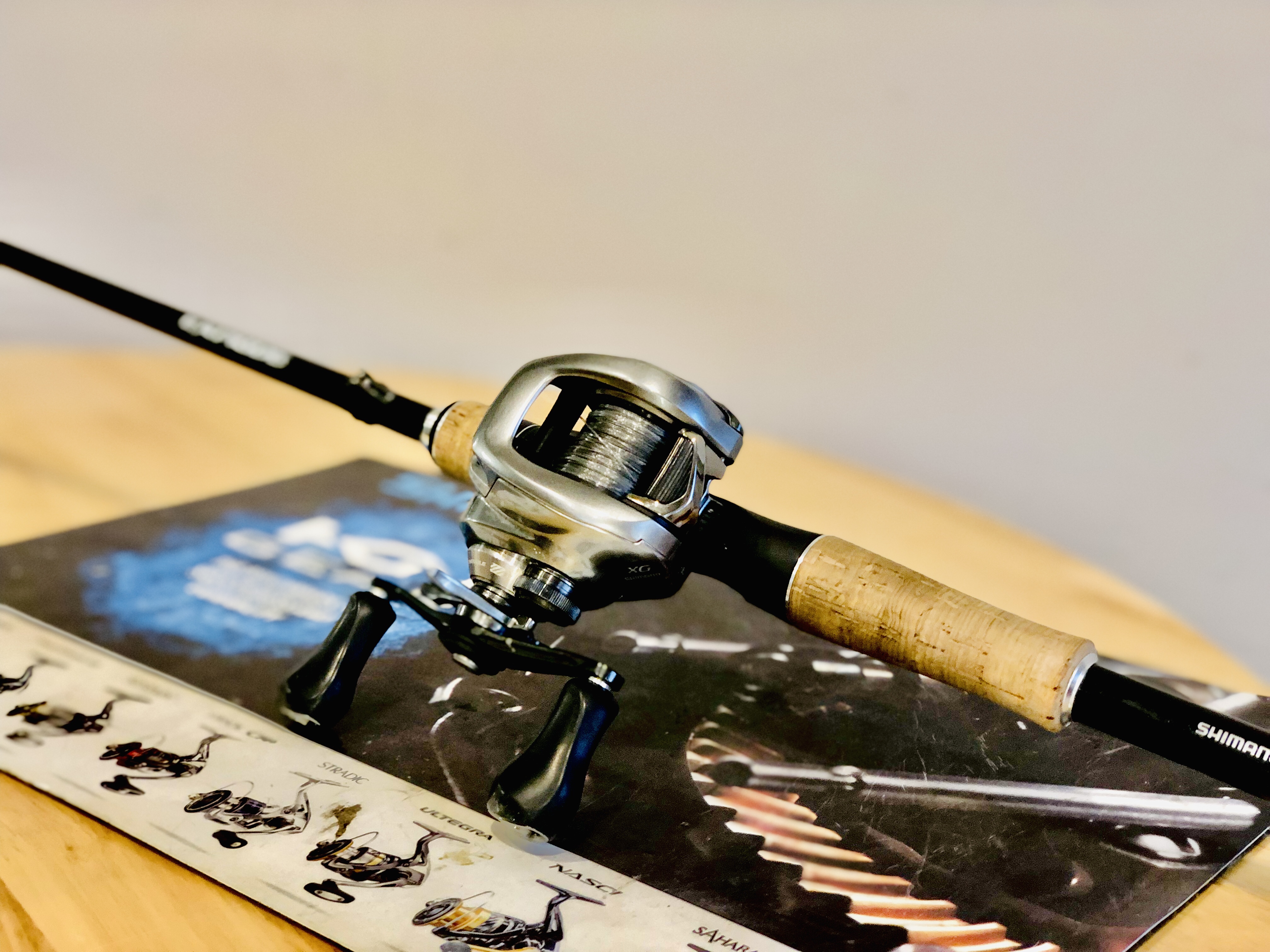
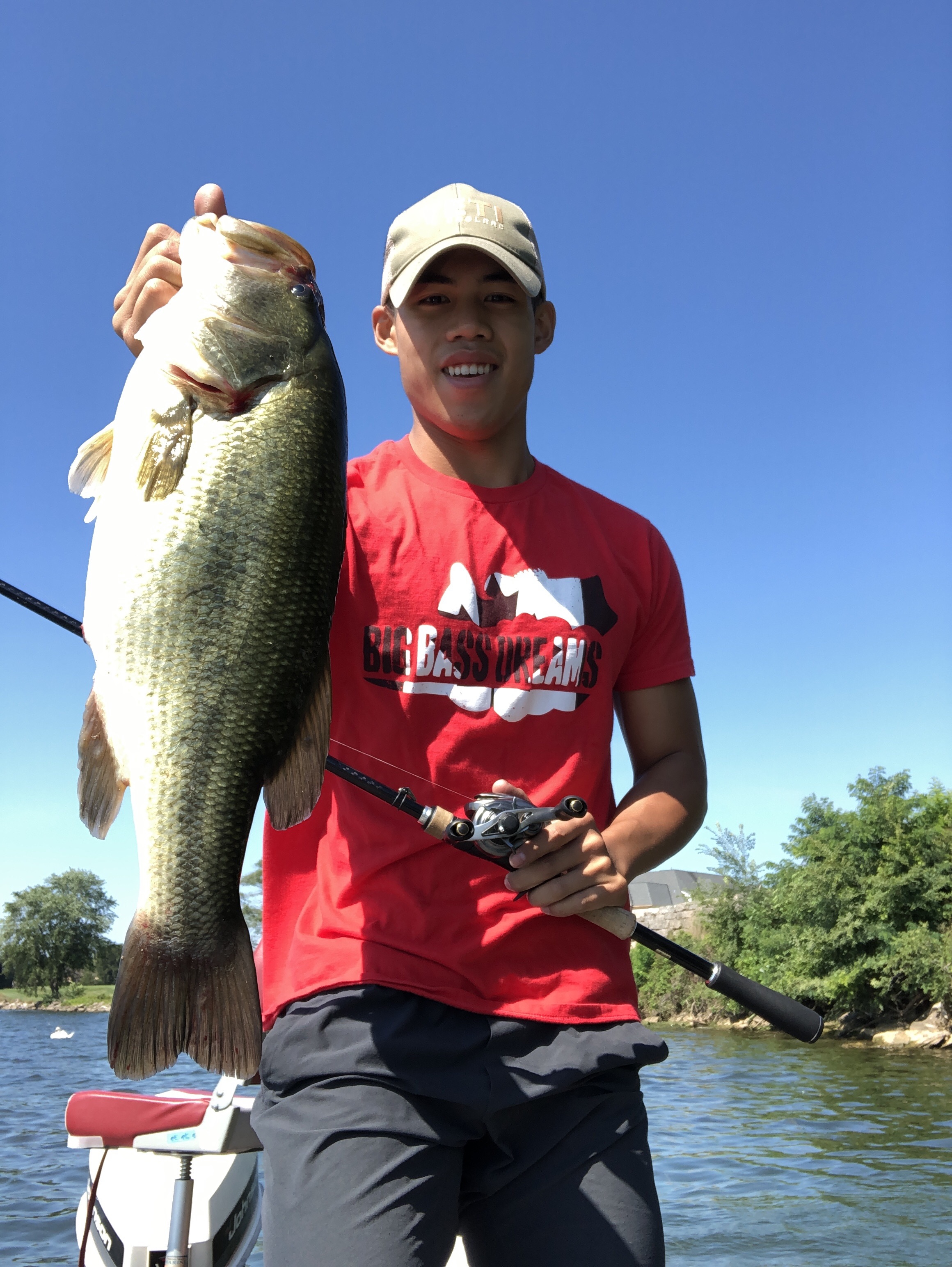

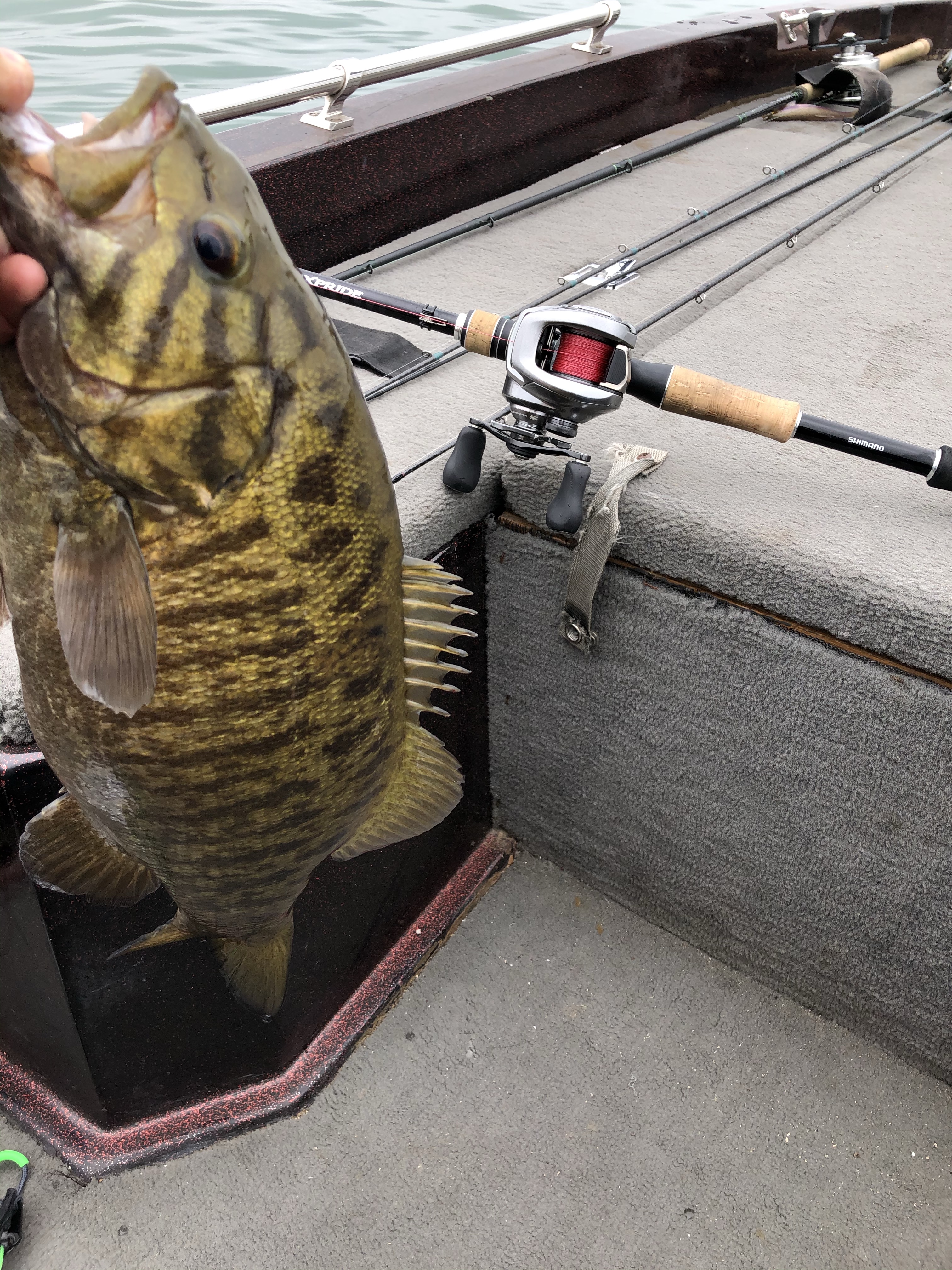
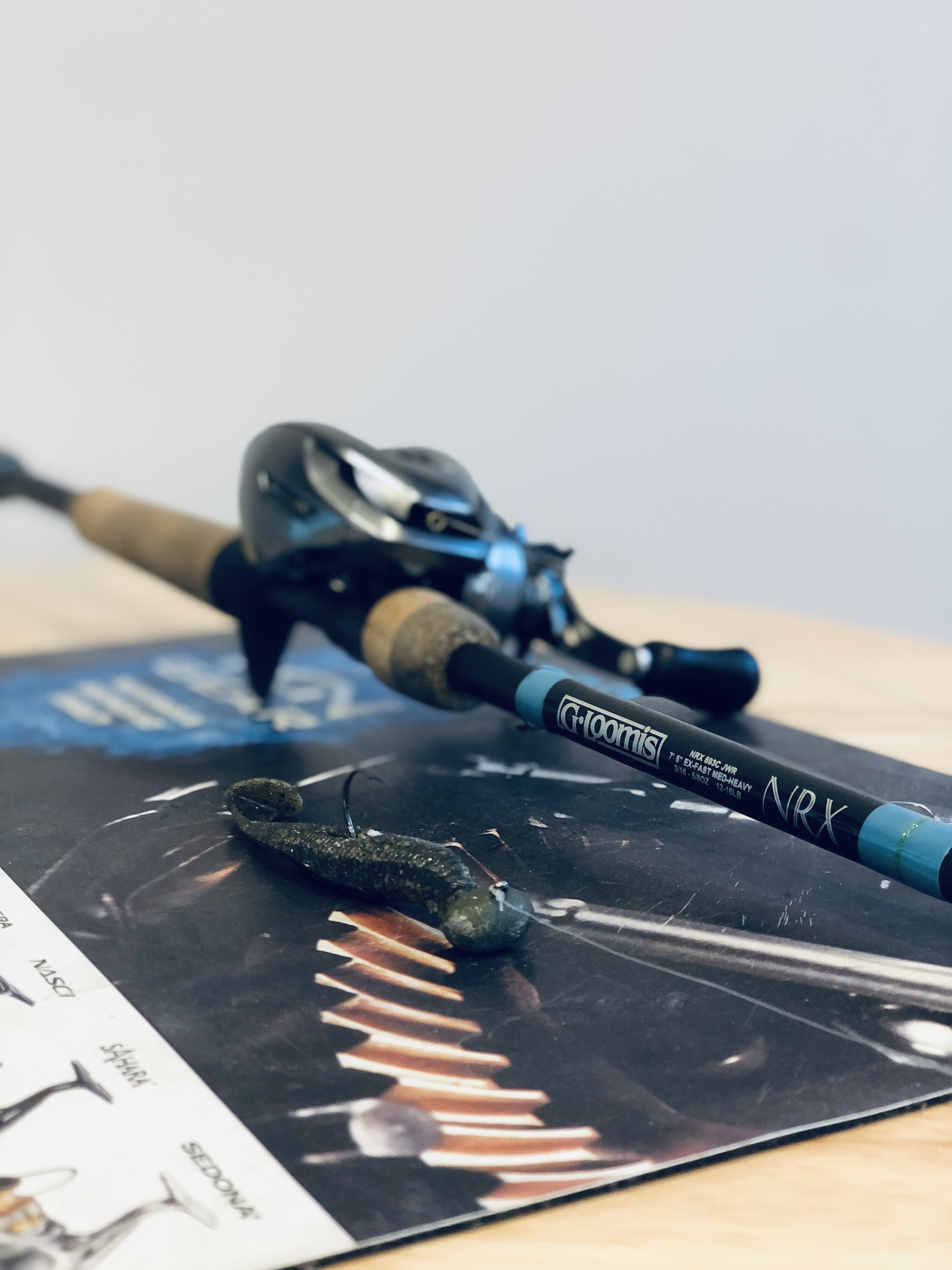
Rod – Shimano Expride 7’2″ Heavy
For a long time, the Shimano Zodias was about as high end of a rod as I needed…until I picked up the Shimano Expride. Featuring Hi-Power X, this rod is an absolute weapon! I find it has a lighter feel and more parabolic action compared to the Zodias and is definitely worth the upgrade for how much I enjoy pitching a jig.
Being slightly longer than a traditional 7′ rod, I gain a bit more leverage to get a fish’s head up and out of cover, without the rod being too long for me to be able to pitch with. The 7’2″ still allows me to skip my bait under docks and cover effectively, whereas when I use a rod 7’3″ and up, I start to struggle.
Choosing a “Heavy” power, for my pitching rod allows me to bump up my line and set the hook hard with zero concerns. This rod is rated up to 1.5 ounces and is perfect for pitching 3/8 and 1/2 ounce jigs. You can go down to a medium heavy power for a more finesse approach, but I find a 3/8 oz jig is about the max of what I like to throw with it and I subsequently downsize my line.
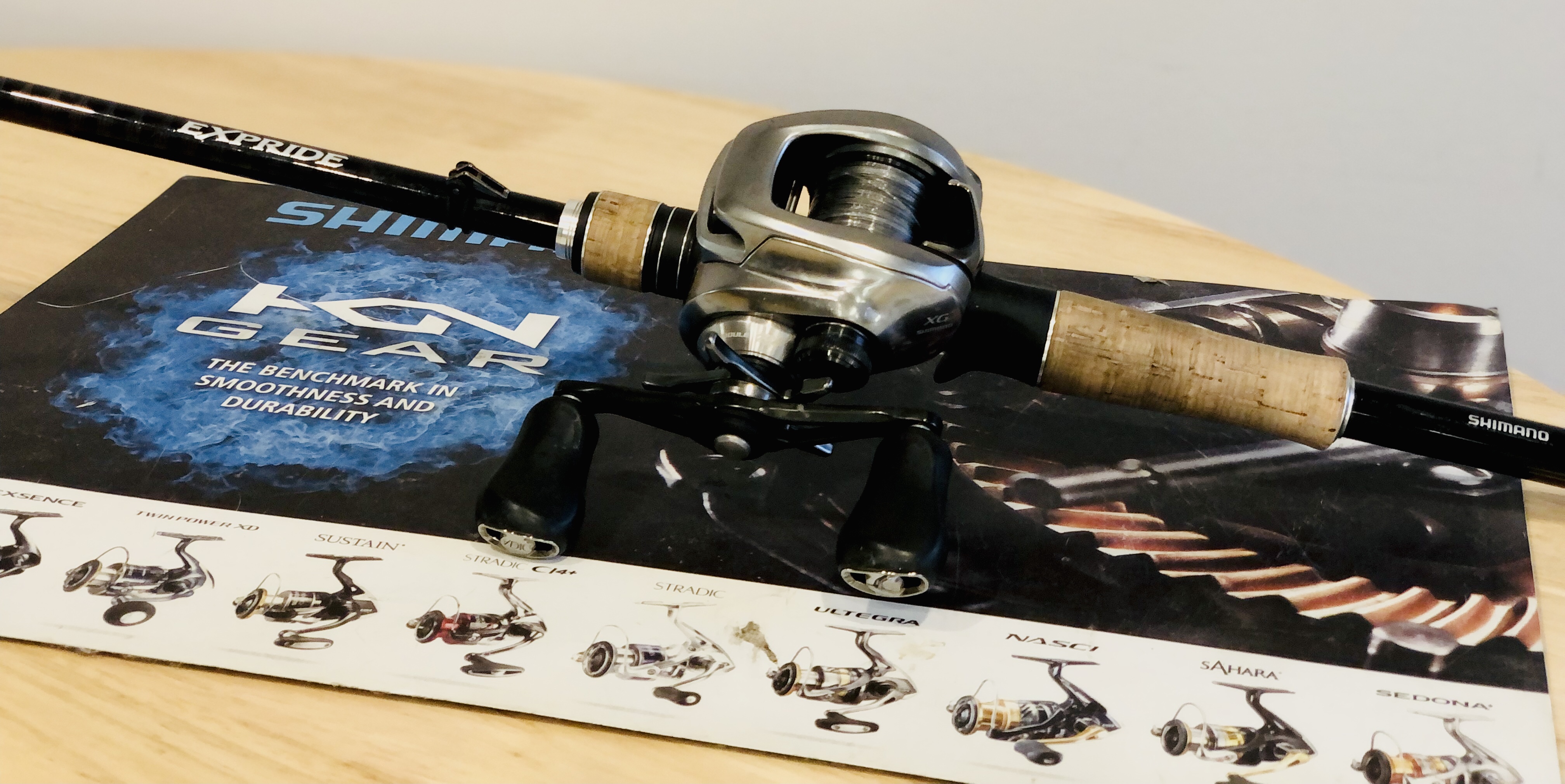
Reel – Shimano Bantam MGL XG
The Bantam MGL is by far my favourite reel I own, even over reels more expensive. If I had to choose, just one reel to load out every combo with, it’d be this. It offers unquestionable reliability with a brass Micro Module Gear and a CoreSolid Body. The low profile frame palms perfectly in your hands. I have the utmost confidence that I can flip into the thickest of cover and set the hook as hard as I can and the Shimano Bantam MGL will not fail me.
I choose the XG (8.1:1) gear ratio for faster retrieve speed. This ratio picks up 34″ of line per one revolution of the handle. The primary reason is so that I can pick up slack as fast as possible. Most times I’ve lost fish were when they either swam towards me, or jumped and spat the hook. I’d much rather have the ability to catch up to the fish and keep tension than have a reel that is too slow for this application.
The secondary reason for choosing an 8.1:1 reel is so that you can be a more efficient angler. Power fishing a jig and pitching the bank, you tend not to fish a cast for very long. Often times, you’re pitching your bait in, shaking it or letting it soak, but then you just reel the bait bait for the last 1/2 of the cast. By reducing the number of times you need to physically turn the handle, you’ll be able to pitch your bait in more times and faster throughout the day.
Line- 40lb PowerPro Braid
While 40 pound line may seem excessive to some, the diameter of the line is really what I’m focused on. 40lb braid is thick enough and has a high enough knot strength to where I’m not worried if I have to pull the fish out of weeds or big brush piles and logs. You can take this though process and decide to go heavier, but I find as you go to a thicker line, it eventually effects how well it comes off your reel and how smooth your pitch is.
I prefer either original PowerPro Spectra in Red or PowerPro SuperSlick V2 in Onyx. The SuperSlick V2 is an 8-strand braid compared to 4-strand Spectra and reduces the friction through your guides for better casting performance. On the other hand, the abrasiveness of the Spectra tends to cut through weeds better in my opinion.
When pitching in more clear water, I will tie a 17-20lb fluorocarbon leader using a FG knot. The FG knot allows me to tie longer leads and let it run through my guides without damaging either the knot or my rod. Alternatively, you can run straight fluorocarbon as your mainline.
Comment what your favourite pitching rod and reel setup is below!





 Tie 1 On - Fishing